Email:
sales@testmachines.com.au

Call Us:
0418 369 505

When precision is paramount, every detail counts. This holds particularly true in the manufacturing domain, where the accuracy of each component can make or break the final product’s functionality. UTM calibration, or Universal Testing Machine calibration, is a cornerstone in achieving this high level of accuracy. This guide delves deep into the what, why, and how of UTM calibration, making it an indispensable resource for anyone involved in precision manufacturing.
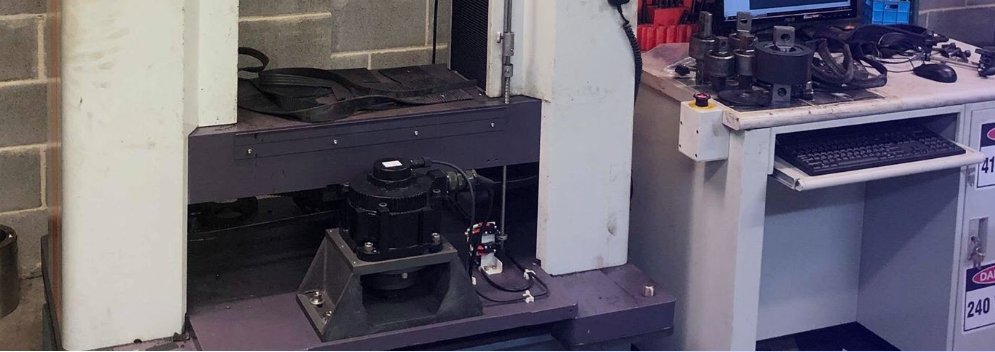
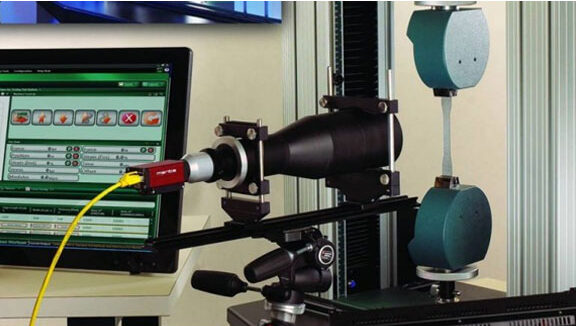
UTM calibration involves adjusting and verifying the performance of Universal Testing Machines, which are used to test the tensile and compressive strength of materials. By ensuring these machines are calibrated correctly, manufacturers can trust the data they gather, which informs decisions on material quality and suitability.
Think of UTM calibration as your morning routine; just as you wouldn’t head to an important meeting in yesterday’s clothes, precision machines shouldn’t operate on outdated settings. Regular calibration keeps your machines not just running, but running correctly, thus ensuring the validity and repeatability of your material testing results.
A Universal Testing Machine is a complex beast, but at its heart, it measures force and displacement. The calibration process ensures these measurements are accurate by comparing them against known standards. This involves various components like load cells, which require precise handling and regular checks to maintain their integrity and performance.
Strain gauges are critical in the calibration process. They measure the deformation (strain) of an object when a force is applied, providing vital data that helps in understanding material behaviour. Proper calibration of strain gauges ensures that their sensitivity and accuracy are maintained, directly affecting the overall accuracy of the UTM.
The calibration process can be broken down into a series of methodical steps, starting from a pre-check of the machine for any obvious issues to the detailed assessment of its mechanical components. This includes setting the machine to its zero point, running it through its paces, and adjusting as necessary to meet the required standards.
Calibration is not a do-it-yourself kind of task. It requires skilled technicians who understand the intricacies of the machines and the standards they must meet. These professionals use their expertise to not only adjust the machines but also to spot potential issues before they become major problems.
No two materials behave exactly the same way under stress, which introduces a layer of challenge in calibration. The technician must account for these variations to ensure that the machine can accurately test a wide range of materials. This adaptability is crucial in industries where material properties can significantly impact the quality and safety of the final product.
Even the environment in which a UTM operates can affect its calibration. Variables such as temperature and humidity can influence material properties and machine performance. Thus, part of UTM calibration is ensuring the machine can deliver accurate readings under varying environmental conditions.
Set a calibration schedule that reflects the use and importance of the equipment. High-use or critical machines may need more frequent checks to maintain their accuracy and reliability.
Detailed records of each calibration session provide a valuable history of the machine’s performance and can help in diagnosing future issues. These records should be meticulous and comprehensive, offering insights into the machine’s operational integrity over time.
Technicians must keep up with advances in both the technology they calibrate and the standards they adhere to. Continuous training is essential, ensuring that the skills needed to perform UTM calibration evolve alongside the machines and materials they assess.
UTM calibration is more than just a routine check; it’s a commitment to excellence. By understanding and implementing thorough calibration practices, manufacturers can ensure the quality and durability of their products. In an industry where every micron counts, calibrated machines are the foundation of quality assurance that leads to trust and success in the marketplace.
In precision manufacturing, every small piece plays a big role. UTM calibration ensures that these pieces fit perfectly in the puzzle of industrial perfection, making it not just a procedure but a pathway to excellence.


Contact Test Machines Australia today, you may contact us via our Australia Wide contact number

Alternatively you can send us an email throughthe contact form below and a representative will respond in due time.

Get in touch by filling out the Contact Us form below
Get in touch by filling out the Contact Us form below